
















Air Quality in Residential and Commercial Buildings
Good indoor air quality (IAQ) is essential for health, productivity, and overall well-being. Here's why it matters:
Health Impacts
People spend roughly 90% of their time indoors, where pollutant concentrations can be 2–5 times higher than outdoors. Poor IAQ is linked to:
- Respiratory issues – asthma, allergies, and chronic lung disease
- Sick Building Syndrome (SBS) – headaches, fatigue, and irritation with no identifiable cause
- Cardiovascular effects – long-term exposure to fine particles and VOCs
- Cognitive impairment – elevated CO₂ levels reduce concentration and decision-making ability
Common Indoor Pollutants
- Volatile Organic Compounds (VOCs) from paints, furniture, and cleaning products
- Particulate matter (PM2.5/PM10) from dust, cooking, and combustion
- Carbon dioxide (CO₂) from occupants in poorly ventilated spaces
- Mold and biological contaminants from moisture and humidity issues
- Radon – a naturally occurring radioactive gas that seeps through foundations
- Carbon monoxide (CO) from faulty heating systems or appliances
Productivity & Performance
Studies show that good IAQ in commercial buildings can increase worker productivity by 8–11% and significantly reduce absenteeism. Schools with better ventilation show measurable improvements in student test scores and attention.
Energy Efficiency vs. Ventilation
Modern buildings are increasingly airtight for energy savings, which can trap pollutants. Balancing energy efficiency with adequate ventilation (through systems like ERVs/HRVs) is a critical design challenge.
Regulatory & Legal Considerations
- ASHRAE Standard 62.1 (commercial) and 62.2 (residential) set minimum ventilation requirements
- OSHA regulates workplace air quality standards
- LEED and WELL certifications incentivize high IAQ standards in buildings
- Poor IAQ can create liability for landlords and building managers
Economic Costs
The EPA estimates poor indoor air quality costs the U.S. economy tens of billions of dollars annually through healthcare costs, lost productivity, and building-related illness.
Best Practices for Improving IAQ
- Ensure proper mechanical ventilation (HVAC maintenance and fresh air intake)
- Use low-VOC materials in construction and furnishings
- Control humidity (ideally 30–50%) to prevent mold
- Install air filtration (MERV 13+ filters or HEPA systems)
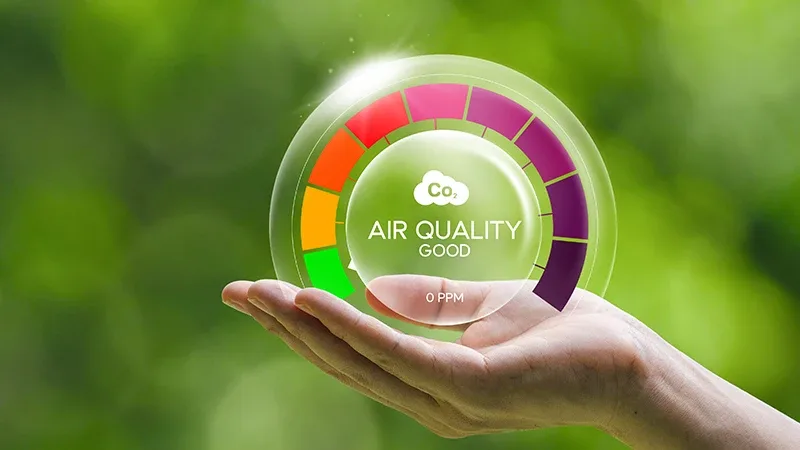
- Use air quality monitors to track CO₂, PM2.5, and VOCs in real time
- Implement source control — remove or reduce pollutant sources
In short, indoor air quality is a foundational pillar of healthy, sustainable, and productive built environments — and it's increasingly recognized as a core responsibility in both residential and commercial design.